

Can Room Fragrance Cause Headaches? Signs Your Home Scent Is Too Strong
A candle that smells cozy in the store can feel completely different after an hour in a closed bedroom. So, can room fragrance cause headaches? For some people, yes. Strong or lingering scents from candles, plug-ins, sprays, wax melts, and even heavily fragranced cleaning products can leave them feeling headachy, foggy, or uncomfortable.
That does not mean fragrance is automatically bad or that you have to give up a home that smells fresh. It usually means the scent, the amount used, the room size, or the way the product is dispersed is not working for you. A more comfortable home often comes down to lighter fragrance, better airflow, and choosing products with a softer presence.
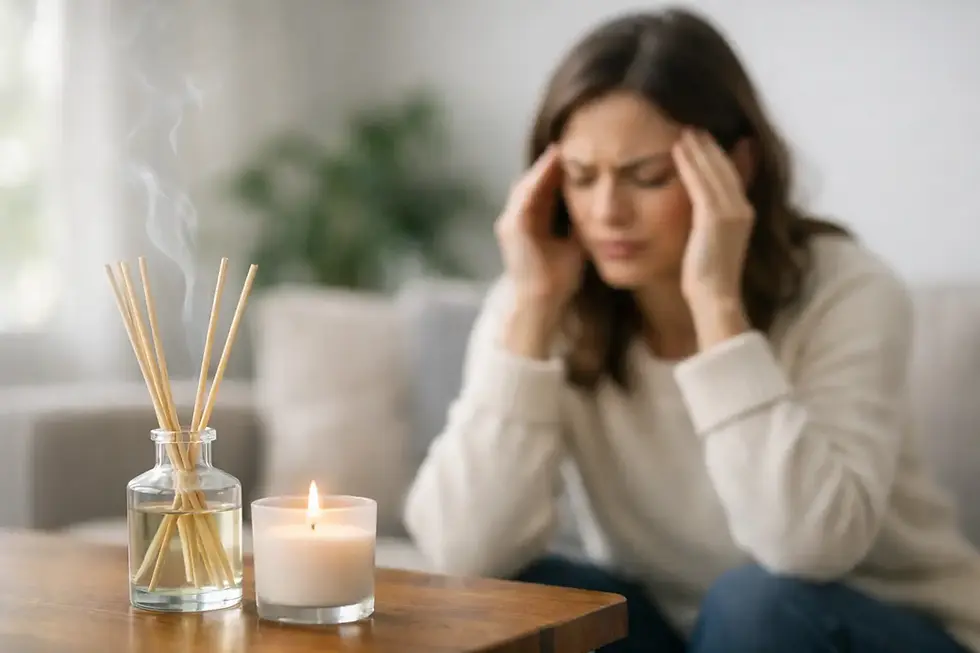
Quick Answer> Yes. Room fragrance can trigger or worsen headaches for some people, especially when scents are strong, layered, or used in small, poorly ventilated rooms. Candles, plug-ins, room sprays, wax melts, fragranced cleaners, and essential-oil blends can all contribute. A simple first step is to reduce or remove scented products, air out the room, and then reintroduce only one fragrance source at a low level. If headaches are new, severe, frequent, or continue even after the fragrance is removed, it is worth discussing them with a healthcare professional. |
Why Room Fragrance Can Trigger Headaches
Fragrance is not one single thing. It is a blend of scent ingredients, and those blends can be intense even when a product is labeled clean, natural, or relaxing. What bothers one person may be perfectly pleasant to someone else.
A strong scent can be an irritation trigger, particularly in a small room with closed windows. Plug-in warmers and automatic sprays are easy to overlook because they release fragrance continuously. The smell may seem gentle at first, but it keeps building in the air and in soft surfaces such as curtains, rugs, bedding, and upholstery.
Some people are especially sensitive to fragrance, including those who already notice headaches around perfume, cleaning aisles, car air fresheners, or scented laundry products. Others may only have trouble when they are tired, dehydrated, congested, stressed, or spending a lot of time in one fragranced space. The pattern matters more than any single label on the package.
It is also easy to layer scent without realizing it. A fresh-smelling bathroom spray, a scented hand soap, a laundry booster, and a diffuser in the nearby hallway can create a much stronger overall effect than any one product alone.
The Signs Your Home Scent May Be Too Strong
A headache is the clearest clue, but it is not the only one. You might notice that your eyes, nose, or throat feel irritated after lighting a candle. You may feel nauseated, distracted, or like you need fresh air. Sometimes the signal is subtler: you sleep less comfortably in a fragranced bedroom or feel noticeably better after leaving the house.
Timing can help you narrow it down. If discomfort begins after turning on a plug-in, spraying a room mist, deep-cleaning with fragranced products, or burning a candle, fragrance may be part of the picture. If a headache is new, severe, frequent, or comes with concerning symptoms, it is wise to check in with a qualified health professional rather than assuming the room scent is the only cause.
A simple at-home test can be useful. Remove or turn off fragranced products in one area for several days, air out the space, and see whether the room feels more comfortable. Then introduce just one product at a low level. This is less frustrating than replacing everything at once, and it can show you whether the issue is strength, a certain type of product, or fragrance layering.
Can Room Fragrance Trigger Headaches Even if It Smells Good?
Absolutely. Enjoying a scent does not guarantee that your body will enjoy prolonged exposure to it. A warm vanilla candle or crisp linen spray can create an instant feeling of calm, yet still become overwhelming in a small apartment, a closed office, or a bedroom used for eight hours of sleep.
This is why scent intensity matters as much as scent family. Bright citrus, eucalyptus, mint, intense florals, and perfume-like blends can feel especially sharp to some people. But sweeter gourmands, woods, laundry scents, and even essential oil blends can also be too much when used heavily. There is no universal “headache-proof” note.
Marketing terms deserve a little perspective, too. “Natural fragrance,” “essential oil,” and “non-toxic” do not automatically mean a product will feel comfortable for every household. Essential oils have strong aromas, and natural extracts can still be irritating to people who are scent-sensitive. The best choice is the one you can use lightly and enjoy without feeling worse afterward.
Make Your Home Smell Fresh Without Overdoing It
The most reliable way to create a comfortable scent experience is to treat fragrance as an accent, not the main event. Start by addressing the source of stale air or odors. Open windows when weather allows, run kitchen and bathroom exhaust fans, wash textiles regularly, empty trash promptly, and give damp towels time to dry. A clean, well-ventilated room needs far less added fragrance.
For fragrance, choose one zone rather than scenting the entire home. A lightly scented candle in the living room for an evening is usually easier to control than plug-ins running in every outlet. A reed diffuser with fewer reeds can offer a gentler option, although it still works best in a larger, ventilated space and away from where you sleep.
Use these practical adjustments to lower the chance of scent overload:
Keep candles, diffusers, and sprays out of bedrooms, nurseries, and other spaces where someone spends long stretches of time.
Use one fragrance source at a time instead of layering candles, plug-ins, laundry scents, and room sprays.
Choose smaller candles or low-output diffusers, especially in bathrooms, apartments, and closed rooms.
Save room spray for occasional use rather than spraying it repeatedly to maintain a constant scent.
Give the room a break by opening a window or turning off the fragrance source after a short period.
For many homes, the coziest result is a room that smells clean first and softly scented second. That might mean a freshly washed throw, a neutral soap, a bowl of baking soda in a musty closet, or a brief candle burn while you settle in for the evening. It does not need to smell like a hotel lobby to feel cared for.
Choose Fragrance Products You Can Control
When headaches are a concern, control is a feature worth shopping for. Products that run continuously can be convenient, but they make it harder to notice when the scent has crossed from pleasant to overpowering. A candle you can extinguish, a room spray you can use once, or a diffuser with adjustable settings gives you more flexibility.
Look for straightforward labeling and avoid buying a large quantity before you know how a scent will feel in your space. If possible, begin with the smallest size. Keep the original receipt, test the product in a well-aired common area, and avoid trying several new fragranced items in the same week.
Unscented versions of everyday products can make a meaningful difference, too. Switching laundry detergent, dish soap, multipurpose cleaner, or trash bags to fragrance-free options can leave more room for the one scent product you truly enjoy. This approach is especially helpful if your home already has a lot of hidden fragrance coming from cleaning and laundry routines.
A simple air purifier may also support a fresher-feeling room by helping with airborne particles, but it is not a reason to use more fragrance. Think of it as part of a clean-air routine alongside ventilation and regular cleaning, not a way to cover up odors.
A Softer Scent Routine for a More Comfortable Home
If you love the mood of home fragrance, there is no need to make your space feel sterile. Try reserving scent for moments when it adds something: a gentle candle during a relaxed bath, a light diffuser in the living room before guests arrive, or a linen mist used sparingly on a washable throw.
Pay attention to the rooms where you recover and rest. Bedrooms, reading corners, and work-from-home spaces tend to feel better when the air is quiet and clean rather than constantly perfumed. A softer scent routine can still make home feel warm and welcoming, while giving your head and your senses a little more room to settle.
Frequently Asked Questions
Can scented candles cause headaches?
Yes, for some people. Strong fragrance, long burn times, poor ventilation, or several scented products used together may make a room feel overwhelming.
Can plug-in air fresheners cause headaches?
They can bother scent-sensitive people because they release fragrance continuously. Turning the plug-in off for a few days is an easy way to see whether symptoms improve.
Can essential oils trigger headaches too?
Yes. “Natural” does not automatically mean gentle. Essential oils can have very strong aromas, and some people find particular scents irritating or overwhelming.
What should I do if a room fragrance gives me a headache?
Stop or remove the fragrance source, open a window if possible, and spend some time in fresh air. Avoid immediately replacing it with another scented product.
Can an air purifier help with strong fragrance?
An air purifier with activated carbon may help reduce some odors and airborne chemicals, while HEPA filtration mainly targets particles. Ventilation and reducing the fragrance source still matter most.
Is fragrance-free always better?
Not necessarily for everyone, but fragrance-free versions of laundry, cleaning, or personal-care products can be useful when you are trying to identify which scent is causing discomfort.
Final Thought: A Fresh Home Should Still Feel Comfortable
> Home fragrance should make a room more enjoyable, not harder to spend time in. If a scent feels pleasant for a few minutes but becomes overwhelming after an hour, using less is often the better solution.
Start with clean air, ventilation, and removing the source of unwanted odors. Then add fragrance lightly and intentionally. One subtle scent in the right room can often feel far more inviting than several fragranced products competing for attention.


