Why Most Lavender Candles Don’t Help You Sleep (And What Actually Does)
Updated: May 12
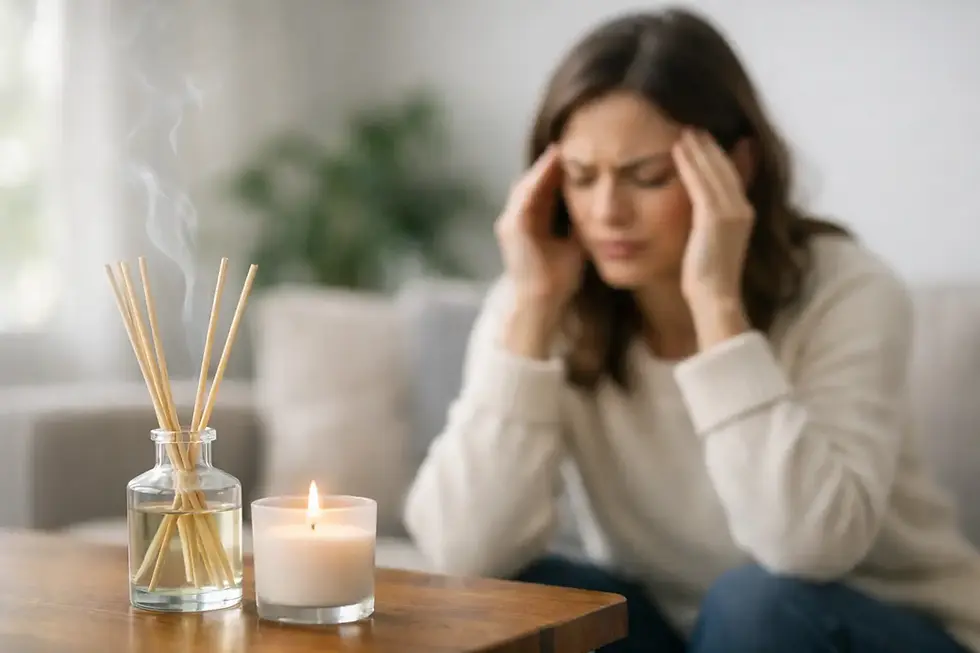
A lavender candle can make a room feel calmer, softer, and more relaxing. But that does not always mean it will help you sleep better. A lot of people buy a lavender candle expecting it to work like a sleep switch, then feel disappointed when nothing really changes at bedtime.
The reason is simple: relaxation is not the same as sleep support. Many candles are made for ambiance, not for real bedtime results. They may smell nice, but if the fragrance is synthetic, the wax burns poorly, the lavender type is wrong, or the scent is too strong, the candle ends up creating mood more than meaningful rest.
Quick AnswerMost lavender candles don’t help sleep the way people expect because they are often made with synthetic fragrance instead of true lavender essential oil, use low-quality wax, or rely on the wrong type of lavender. A better candle should use real Lavandula angustifolia, clean-burning wax like soy or beeswax, and be used as part of a calming bedtime routine rather than as a sleep fix on its own. |

Relaxation Is Not the Same as Sleep Support
A product can help you feel relaxed without actually helping you sleep better. Those two things are connected, but they are not identical. A lavender candle may help signal that the busy part of the day is over, which can be useful in a wind-down routine. But if your real sleep blockers are stress, late caffeine, a hot room, blue light exposure, noise, or uncomfortable bedding, a candle is not solving the main problem.
That is where a lot of the frustration comes from. People do not necessarily fail because lavender “doesn’t work.” They fail because they expect one scented product to overcome a whole bedroom setup that is still working against sleep.
→ If you want the exact steps that make lavender more useful at bedtime, see: How to Use Lavender for Sleep: The Complete Guide
1. Synthetic Fragrance vs. Real Lavender Oil
This is the biggest issue. Many candles labeled “lavender” do not contain real lavender essential oil at all. They use fragrance blends designed to smell pleasant in a room, not to deliver the same aromatic profile as true lavender.
Real lavender is valued because it contains compounds such as linalool and linalyl acetate, which are associated with a calmer, softer aromatic effect. Synthetic fragrance may smell similar at first, but it often lacks that same natural profile. In practice, that means the candle may create a “lavender vibe” without delivering the kind of scent experience people are actually hoping for at bedtime.
That is why some candles smell strong, sweet, or powdery, yet still feel oddly useless when you are trying to relax.
2. The Wrong Type of Lavender Can Work Against You
Even when a candle uses “real lavender,” there can still be a catch. Some products use lavandin instead of true lavender. Lavandin is cheaper, stronger, and more commercial, which makes it attractive for mass-market candles. But for sleep, that is not always ideal.
True lavender for bedtime is usually Lavandula angustifolia. It tends to have a gentler, more calming profile. Lavandin can smell louder and sharper, which may work well for room fragrance but not necessarily for a softer, more bedtime-friendly experience.
So if a candle smells aggressively floral or overly strong, the problem may not be lavender itself. It may be the specific type being used.
3. Poor Wax Quality Distorts the Whole Experience
Even a good oil can underperform in a bad candle. Cheap candles often use paraffin-heavy wax or artificial additives that burn hotter, distort the scent, and sometimes release a heavier smell than you actually want in a bedroom.
A candle made for sleep should feel clean and soft, not dense, smoky, or irritating. If the wax burns too hot, the scent can become harsher, flatter, or more artificial over time. That completely changes the experience.
In general, cleaner options like soy wax or beeswax tend to work better for a calmer bedtime candle because they let the fragrance release more gradually.
4. If the Scent Is Too Strong, It Can Have the Opposite Effect
A lot of people assume stronger means better. For sleep, the opposite is often true. A scent that is too strong can feel stimulating, distracting, or even irritating. Instead of helping you settle down, it can keep your brain more alert.
Sleep responds better to subtle, calming signals than to intensity. If the candle fills the room too aggressively, it stops feeling soothing and starts competing for your attention. Some people even end up with mild headaches, throat irritation, or that heavy “perfume in the air” feeling that makes rest less comfortable.
A sleep candle should support the room quietly, not dominate it.
Why Lavender Candles Often Feel Better in Theory Than in Real Life
Lavender has a strong reputation for calm, so it is natural to expect a lavender candle to “do something” for sleep. But real bedtime is messy. Bedrooms are shared. Schedules shift. Stress changes. Screens stay on too long. What feels relaxing at 8:30 p.m. may do very little at 11:15 when your mind is still racing.
There is also a timing problem. You should not fall asleep with a candle burning. So the very product people hope will help them drift off has to be blown out before sleep really begins. That does not make it useless, but it does limit what it can realistically do.
In many cases, a lavender candle works better as a pre-bed comfort cue than as a direct sleep aid.
What Actually Helps More Than a Lavender Candle
If your goal is better sleep, the biggest wins usually come from the room itself and the routine around it. Temperature matters. Light matters. Bedding matters. Air quality matters. Noise matters. If those things are wrong, even a lovely candle will struggle to make a real difference.
A cooler room often helps more than fragrance alone. Softer lighting and less phone time before bed can matter much more. Better bedding can remove physical discomfort that keeps you awake. Cleaner, fresher air can help if stuffiness or irritation is part of the problem.
That is why people often get better results when they stop looking for one “magic” product and start building a better setup instead.
☞ A lot also depends on what works best for your room and routine, so compare Best Ways to Use Lavender for Sleep: Diffuser vs Spray vs Sachets vs Oil.
If You Love Lavender, Use It in a Smarter Way
There is no reason to give up on lavender if it genuinely makes your room feel more peaceful. The key is to use it with realistic expectations.
A lavender candle can be a nice part of a wind-down ritual while you read, stretch, shower, or put away your phone. In that role, it makes sense. It helps create a transition from daytime energy to evening calm. It just should not be treated like a guaranteed sleep solution.
If lavender genuinely helps you relax, other delivery methods may work better depending on your setup. A diffuser used earlier in the evening, a light pillow spray, or linen products with a softer scent may sometimes be more practical than a candle.
It also helps to keep the routine simple. One calming scent, lower lights, a cooler room, and consistent bedtime habits will usually do more than a whole collection of trendy sleep products.
So, Are Lavender Candles Worth It?
Yes — but only if you choose the right one and use it the right way.
Most lavender candles fail not because lavender is a myth, but because the candle is made for scent alone, not for real bedtime support. A candle that smells nice is not always a candle that helps your body wind down.
A better lavender candle should use real Lavandula angustifolia, clean-burning wax, and a softer scent profile. Even then, it works best as one part of a broader sleep-friendly setup, not as a substitute for good sleep habits or a comfortable room.
→ For a more practical next step, see our guide to lavender sleep balm, where we explain how it works, where to apply it, and which options are worth considering.