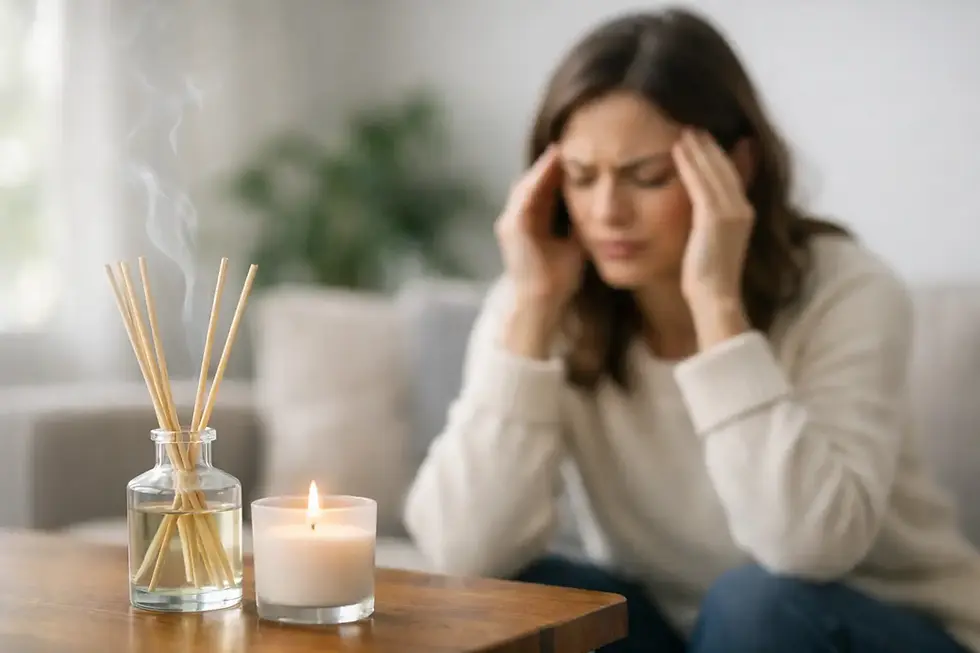
Scent and Mood Rituals: Simple Ways to Create Calm and Balance at Home
Updated: Mar 6
Fragrance has a subtle but powerful effect on how a space feels. A single scent can shift your mood, calm your mind, or help you focus after a long day.
That’s why scent and mood rituals are becoming a simple way to bring balance into everyday life. By intentionally using aromas like essential oils, candles, or herbal teas, you can transform ordinary moments into calming routines.
These rituals don’t require dramatic changes. Often, a small daily habit — lighting a candle, brewing tea, or diffusing essential oil — can create a noticeable shift in atmosphere and mindset.
Below you’ll discover how scent influences mood, why these rituals work, and how to create simple fragrance habits that make your home feel calmer and more balanced.

And because a clean environment amplifies the power of fragrance, you can see how tidy-home habits transform your well-being. These mindful touches bring balance into your home and make it a sanctuary for your well-being.
What are scent and mood rituals?
Scent and mood rituals are simple daily habits that use fragrance to influence how you feel at home. These rituals may include lighting scented candles, diffusing essential oils, or drinking herbal teas. Because scent is strongly connected to the brain’s emotional center, these small practices can help reduce stress and create a calm atmosphere.
Why Scent Affects Mood So Strongly
Our sense of smell is directly connected to the limbic system — the part of the brain responsible for emotions and memory.
This means scent can influence mood almost instantly.
Fragrance can:
• reduce stress hormones
• trigger emotional memories
• signal relaxation to the brain
• improve focus and mental clarity
Because of this connection, scent is often used in wellness practices such as aromatherapy, meditation, and relaxation routines.
Why Scent and Mood Rituals Work
Rituals themselves are powerful because they create signals for the brain. When you repeat small actions regularly, your mind begins to associate those actions with a specific emotional state.
For example:
• lighting a candle may signal relaxation
• brewing herbal tea may signal a moment of pause
• diffusing lavender may signal bedtime
Over time, these sensory cues help the brain shift more easily into calm or focused states.
Creating a Calming Atmosphere with Essential Oils
Essential oils are one of the simplest ways to introduce fragrance into a space. Each oil has unique aromatic properties that influence mood differently.
Common calming oils include:
• Lavender – promotes relaxation and sleep
• Chamomile – reduces tension and stress
• Sandalwood – grounding and calming
• Bergamot – improves mood and emotional balance
Easy Ways to Use Essential Oils
• Diffusers – add a few drops to water for a steady scent
• Steam rituals – add oil to hot water and inhale gently
• Massage oils – mix with carrier oils for relaxation
Used regularly, these small practices can help create a peaceful atmosphere at home.
Candles: Light, Warmth, and Fragrance Combined
Scented candles create a unique sensory experience. The warm glow of candlelight paired with fragrance signals the brain to slow down.
Lighting a candle often marks the beginning of a quiet moment — reading, journaling, or relaxing.
Best Times for Candle Rituals
• during evening relaxation
• while reading before bed
• during a calming bath
• during meditation or journaling
Because candlelight naturally softens a room’s atmosphere, it works well as part of a relaxing evening routine.

Herbal Teas as a Scented Ritual
Not all fragrance comes from the air — sometimes it’s in the cup you hold.
Herbal teas combine aroma with taste, engaging multiple senses at once.
Popular calming teas include:
• Chamomile – supports relaxation and sleep
• Peppermint – refreshing and mentally clarifying
• Lemongrass – uplifting and calming
The simple act of brewing tea can become a grounding ritual that encourages a moment of pause.
Scent and Mindfulness Practices
Fragrance pairs naturally with mindfulness activities because scent acts as a sensory anchor. When a specific aroma becomes associated with calm, the brain begins to respond faster each time the scent appears.
Examples of scent-based mindfulness rituals include:
• meditation with incense
• yoga with calming oils
• journaling with candlelight
• quiet tea rituals in the evening
These small practices help create moments of presence throughout the day.
Everyday Scent Rituals That Make a Difference
The most effective rituals are the ones repeated consistently.
You don’t need elaborate setups — simple daily habits work best.
Examples include:
• lighting a citrus candle in the morning for energy
• diffusing lavender in the evening
• drinking mint tea during an afternoon break
• using sandalwood incense during reflection
Over time, these rituals shape the emotional atmosphere of your home.
Quick FAQ
What scents help reduce stress?
Lavender, chamomile, and sandalwood are commonly used to reduce stress and support relaxation.
What is the best way to bring fragrance into a home?
Essential oil diffusers, scented candles, and herbal teas are some of the simplest ways to introduce calming scents.
Can scent improve focus as well as relaxation?
Yes. Scents like peppermint, citrus, and rosemary are often associated with improved alertness and concentration.
Final Thought ✨
Fragrance doesn’t need to be dramatic to make a difference. Through simple scent and mood rituals, everyday moments can become calming pauses within a busy routine.
A candle, a cup of tea, or a few drops of essential oil can gently shift the atmosphere of a room — and how you feel within it.
Over time, these small rituals help transform a house into a space of balance, calm, and well-being.