

Review of Sunrise Alarm Clocks
Updated: May 5
A harsh alarm can make even a full night of sleep feel like a bad wake-up. That is why this review of sunrise alarm clocks focuses on a simple question: do these gentle wake-up lights actually make mornings feel better, or are they just another bedside gadget that looks nice for a week?
For many people, the appeal is easy to understand. Instead of waking to a loud sound in a dark room, a sunrise alarm clock slowly brightens your space before your set alarm time. The goal is not to perform a miracle. It is to make waking up feel less abrupt, less stressful, and a little more human. If your bedroom tends to feel cave-like in the morning, especially in winter or if you keep blackout curtains, that can be a real quality-of-life upgrade.
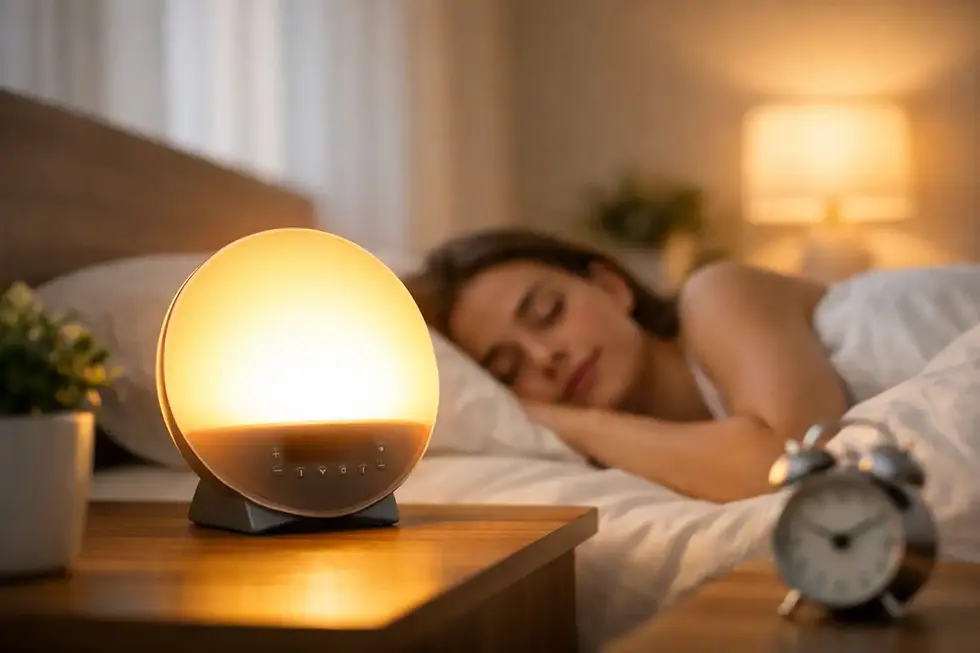
Quick Answer: Are sunrise alarm clocks worth it?Sunrise alarm clocks are worth it if you hate waking up to a loud alarm, struggle with dark mornings, or want your bedroom routine to feel softer and less abrupt. They work best as gentle wake-up lights, not as miracle sleep devices. The most useful models brighten gradually before your alarm time, offer adjustable brightness, include backup sounds, and are easy to set while half-asleep. They may disappoint heavy sleepers, frequent travelers, or anyone who needs a very loud alarm as their main wake-up method. |
Review of sunrise alarm clocks: what they do well
The best sunrise alarm clocks create a softer transition from sleep to wakefulness. Most models begin glowing 10 to 30 minutes before your alarm goes off, gradually moving from a dim amber or red tone into a brighter warm white light. Many also add nature sounds, soft chimes, or FM radio at the end of the cycle.
In real everyday use, that gradual light is the feature that matters most. It can make early mornings feel less jarring, especially for light sleepers, people who hate loud alarms, or anyone trying to build a calmer bedroom routine. If your current setup involves hitting snooze three times while feeling disoriented, a wake-up light may help you feel less dragged out of sleep.
There is also a comfort factor that goes beyond the alarm itself. Many sunrise clocks double as bedside lamps, reading lights, or evening wind-down lights. That makes them more useful than a basic digital alarm, especially if you are trying to make your room feel more restful without adding clutter.
Where sunrise alarm clocks can disappoint
This is where an honest review of sunrise alarm clocks needs a little nuance. They are not ideal for everyone.
If you sleep very deeply, share a room with pets or kids who wake you often, or need a truly loud alarm because you sleep through everything, light alone may not cut it. Some sunrise clocks have decent backup sounds, but not all of them are strong enough for heavy sleepers. In those cases, the light works best as a gentle lead-in, not your only wake-up method.
Brightness is another trade-off. Some budget models look similar online but do not get bright enough to make much difference, especially in larger bedrooms. A dim glow across the room is not the same as a convincing sunrise effect on your nightstand. Placement matters too. If the clock is behind a lamp, pointed away from your bed, or too far from your face, you may miss the benefit.
The other common letdown is setup. Some models are surprisingly annoying to program, with small buttons, unclear menus, or touch controls that seem elegant until you try to use them half asleep. A sunrise clock should make your routine easier, not give you a tiny nightly puzzle.
The features actually worth paying for
When shopping, it helps to separate comforting extras from features that really improve daily use. The first thing to look at is light quality. A good sunrise alarm should brighten gradually and feel warm and natural, not cold or overly blue. A warm tone tends to feel calmer in a bedroom and less like overhead office lighting.
Adjustable brightness is just as important. Some people want a subtle wake-up glow. Others need a much brighter light to notice it. A clock that gives you a good brightness range will fit more rooms and sleep styles.
Sound options matter, but only to a point. A few pleasant sounds are enough. You do not need twenty birdsong variations. What matters more is whether the final alarm volume can be adjusted to a level that works for you. If you are even a moderately deep sleeper, this should be high on your list.
A sunset or sleep mode is another feature that often earns its keep. On better models, the light gradually dims at night to support a more relaxed wind-down. That can be especially nice if you are trying to cut back on bright phone use before bed and make your room feel quieter overall.
If you like multifunctional products, some clocks include white noise, Bluetooth audio, app control, or smart home integration. These can be nice, but they are not essential. If the core light function is weak, the extra tech does not make up for it.
A good sunrise alarm clock should brighten gradually, feel warm rather than harsh, and be simple enough to use every morning. Look for adjustable brightness, backup alarm sounds, and controls that make sense when you are still sleepy. |
Who should consider one
Sunrise alarm clocks make the most sense for people who struggle with dark, groggy mornings rather than people who simply forget to set an alarm. If you wake up feeling startled, cranky, or mentally foggy when a loud alarm goes off, this type of clock is worth a look.
They also fit well in bedrooms built around comfort. If you already care about blackout curtains, soft bedding, low evening lighting, or small changes that help your room feel more supportive, a sunrise clock fits naturally into that setup. It is less about trendy tech and more about creating a gentler rhythm at home.
They are especially useful in rooms with very little morning light. Apartment bedrooms, shaded homes, and spaces that stay dim until late morning can make waking up harder than it needs to be. A sunrise clock will not replace actual sunlight, but it can make the room feel less closed off when the day starts.
Who may want to skip it
If you need an alarm that could wake a brick wall, you may be better off with a louder traditional alarm or a sunrise model specifically known for stronger sound. The same goes if you travel often and want something compact and simple. Most sunrise clocks are designed to stay on a nightstand, not get tossed in a bag.
You may also want to skip one if you are already waking naturally with daylight and feel fine in the morning. Not every sleep product needs to solve a problem you do not have. A sunrise alarm clock is most worthwhile when it addresses a specific friction point in your routine.
What to expect at different price points
Lower-priced sunrise alarm clocks can still be pleasant, but they usually come with compromises. Expect more plastic, fewer brightness levels, simpler sounds, and clunkier controls. That does not make them bad. It just means the experience may feel more basic.
Mid-range options are often the sweet spot. This is where you tend to get better light quality, easier programming, a more polished display, and enough customization to make the clock feel truly useful. For most households, this range offers the best value.
Premium models may add stronger light output, nicer design, app features, better speakers, and more reliable dimming or fade transitions. If the clock will be part of your daily sleep setup for years, spending more can make sense. But if you mainly want a softer wake-up and a cozy bedside glow, you do not always need the top tier.
A few realistic buying tips
Before buying, think about your room and your habits. A small bedroom may not need the brightest model, but a large room probably does. If your nightstand sits lower than your mattress or off to one side, adjustable positioning becomes more important. And if you are sensitive to light at night, check whether the display can dim fully or turn off.
It also helps to be honest about whether you like using apps. Some people love setting schedules from their phone. Others just want a few physical buttons and a routine that works every day. There is no wrong answer here, but there is a better match for your personality.
If possible, give any sunrise clock at least a week before judging it. The first morning can feel unfamiliar, especially if you are used to a loud alarm. Sometimes the benefit is not that you wake up instantly happier. It is that your mornings start feeling less sharp around the edges.
If you want a softer morning routine, compare models by brightness range, display dimming, sound options, and how easy the clock is to program. The best pick is usually the one that fits your room and habits, not the one with the longest feature list. |
Final take on this review of sunrise alarm clocks
Sunrise alarm clocks are not magic, and they are not the right fit for every sleeper. But they can be one of those small bedroom upgrades that quietly improves daily life. When the light is bright enough, the controls are easy, and the sound options suit your sleep style, they do something very simple very well: they help your room wake you up more gently.
If your mornings feel rushed before your feet even hit the floor, this is the kind of comfort-focused change that can actually earn its place on your nightstand. Sometimes living better at home starts with making the first five minutes of the day feel a little softer.


