

How Your Sleep Position Affects Your Spine and Sleep Quality
Updated: Feb 6
Waking up with a stiff back, neck tension, or unexplained aches is often blamed on stress, age, or a “bad night’s sleep.” In reality, one of the most overlooked factors is sleep position. How you sleep every night has a direct impact on your spine alignment, muscle recovery, and overall sleep quality.
Your spine is designed to maintain a natural curve, even while you rest. When your sleeping position disrupts that alignment for hours at a time, the result can be lower back pain, upper back discomfort, and restless sleep. Understanding how your sleep position affects your spine is the first step toward waking up refreshed instead of sore.
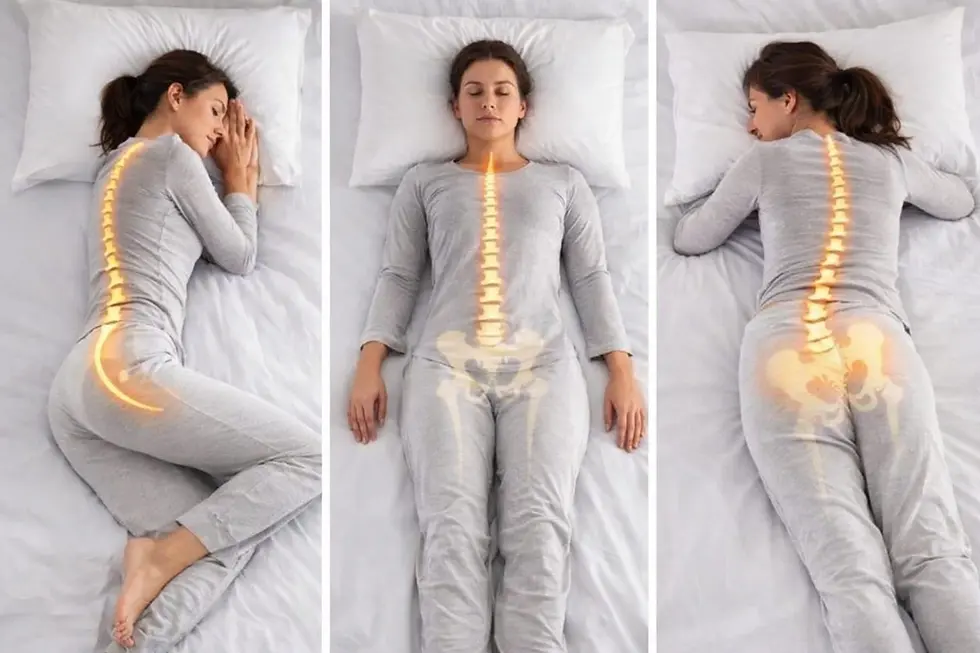
Table of Contents
Why Sleep Position Matters for Spine Alignment
Your spine has three natural curves—cervical (neck), thoracic (upper back), and lumbar (lower back). During sleep, these curves should remain as neutral as possible. When they don’t, certain muscles stay tense instead of relaxing, and pressure builds in joints and discs.
Poor spine alignment during sleep can:
Increase pressure on the lower back
Strain neck and shoulder muscles
Reduce circulation and nerve comfort
Fragment deep sleep stages
Because you remain in the same position for long periods, even small alignment issues can compound over time.
Worst Sleeping Positions for Lower Back Pain
Some sleep positions place excessive stress on the lumbar spine. Among the most common causes of lower back pain from sleeping wrong is a position that exaggerates the natural curve of the lower back or twists the hips unnaturally.
Sleeping on your stomach is often cited as the worst sleeping position for lower back pain, especially if the mattress does not provide adequate support. This position can force the spine into an unnatural arch, compressing the lumbar area throughout the night.
Over time, this can lead to:
Morning stiffness
Persistent lower back pain
Reduced sleep quality
Sleeping on Your Back: Is It Good or Bad for Your Spine?
Sleeping on your back is often considered one of the best positions for spinal alignment—but only under the right conditions. When done properly, back sleeping allows the spine to rest in a neutral position with even weight distribution.
However, many people experience lower back pain while sleeping on their back due to insufficient support beneath the lumbar curve. Without proper alignment, the lower back may sag slightly, creating tension.
Back sleeping can be beneficial when:
The neck is properly supported
The lumbar curve is maintained
The mattress provides balanced firmness
This explains why many people ask, “Why is sleeping on your back good?” The answer lies in alignment—not the position alone, but how well the spine is supported.
Sleeping on Your Stomach and Spine Stress
Stomach sleeping places the spine in one of its most compromised positions. The neck is often rotated to one side for hours, while the lower back is pushed into an unnatural arch.
People searching for how to fix back pain from sleeping on stomach are often dealing with:
Neck stiffness
Lower back compression
Shoulder discomfort
While some people find stomach sleeping difficult to change, understanding its impact on spinal health is important. Even small adjustments—like transitioning toward a side position—can significantly reduce strain over time.
Side Sleeping and Upper Back Pain
Side sleeping is extremely common and generally better for spinal alignment than stomach sleeping. However, it’s not without challenges. Improper side sleeping can contribute to upper back pain due to sleeping position, especially when the shoulders and hips are not evenly supported.
Common issues include:
Shoulders collapsing inward
Upper spine rounding forward
Neck misalignment
This is why many people experience upper back pain sleeping despite choosing what is often considered a healthier sleep position. Alignment—not just position—remains the key factor.
Signs Your Sleep Position Is Harming Your Spine
Not sure if your sleep position is causing problems? Some signs are subtle, while others are hard to ignore.
Common indicators include:
Waking up with stiffness that fades during the day
Recurring back or neck pain without injury
Tingling or numbness in arms or legs
Feeling unrested despite enough sleep
At this stage, many people begin exploring choosing the right mattress for your sleep style to better support their natural sleeping posture.
Can Improving Sleep Position Reduce Back Pain Over Time?
The good news is that improving sleep position awareness can make a real difference. Small adjustments—combined with proper support—often lead to noticeable improvements in comfort and sleep quality.
Over time, better alignment can:
Reduce morning pain
Improve sleep continuity
Support spinal health long-term
While changing sleep habits doesn’t happen overnight, understanding the relationship between sleep position and spinal health is a powerful first step toward better rest.
🔚 Final note
Your sleep position affects more than comfort—it influences how well your body recovers each night. By becoming aware of how posture, alignment, and support interact, you set the foundation for deeper, healthier sleep.

